the science of journaling
ten science-of-journaling books worth reading
the science-side canon of journaling books is smaller than the popular shelf. ten books, four decades of research, honest about what replication has shown.
the science of journaling has its own shelf
The popular journaling shelf and the science-side shelf barely overlap. The popular shelf is organised around method. The science-side shelf is organised around one paradigm and the forty-year argument about how big its effects really are. The paradigm came out of a 1986 trial in which forty-six undergraduates wrote for fifteen minutes on four consecutive evenings about either a personal trauma or a trivial topic. The trauma-writers visited the campus health centre roughly half as often in the six months that followed. Pennebaker and Beall called the result promising rather than definitive, which has turned out to be the most durable thing anyone said about it.[4]
The two meta-analyses that bracket the field disagree about size and agree about direction. Smyth's 1998 pool of thirteen randomised studies returned an average effect of d = 0.47, which is about a third of a standard deviation in real-life terms.[6] Frattaroli's 2006 update pooled a hundred and forty-six studies and reported an overall r = .075, which translates to roughly a Cohen's d = 0.15, smaller again, although the effect under optimal conditions (three or more sessions of at least fifteen minutes each) climbed to r = .200.[3] The shrinkage is a feature. The studies got better; the early enthusiasm did not survive contact with bigger samples and tighter controls. The books that work hardest on this shelf tell that story openly, and the ones that work least hard mostly compensate by getting louder.
ten books, three lineages
Three lineages run through this list. Pennebaker's expressive-writing trials seeded the first and longest one, which the first three books cover. The positive-psychology fork started with Seligman's 1998 relaunch of the field and produced the next four, organised around named interventions like best-possible-self, three-good-things, and gratitude visits. The contemporary applied wing extends both into rumination, acceptance and commitment, and value-affirmation work, and covers the last three. The reviews follow that arc.
Opening Up by Writing It DownHow Expressive Writing Improves Health and Eases Emotional Pain
Pennebaker, Smyth · 2016 · Guilford
the science outlier. expressive-writing trials from the researcher who started the field.
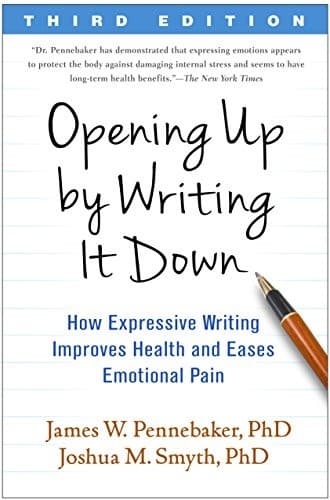
The seed text. Pennebaker did the 1986 trial that started the field and spent the next four decades letting other people try to break it. The 2016 third edition, co-authored with Joshua Smyth, is the version to read. It walks through replications, meta-analyses, and the slow narrowing of the original claim, and it is unusually candid about which parts have softened. Pennebaker has said elsewhere that he is not convinced that having people write every day is a good idea and not even convinced that people should write about a horrible event for more than a couple of weeks, because you risk getting into a sort of navel gazing or cycle of self-pity. The science-side founder arguing against daily journaling is the kind of correction the popular shelf does not produce.
The popular shelf is built around daily practice. Cameron's morning pages are explicitly daily. The bullet-journal community treats unbroken streaks as the metric of success. The gratitude-journal genre assumes daily entries. Pennebaker has argued specifically that daily writing about trauma is more likely to produce harm than benefit, because the rumination loop that brief sessions alleviate is the same loop daily sessions entrench. The protocol the trials validated is three or four sessions of fifteen to twenty minutes each and then stopping. The popular shelf cannot say this without dismantling its own business model.
Read the book for the protocol and for the disclaimers. The longer version of the Pennebaker effect at forty goes deeper on the shrinkage between Smyth 1998 and Frattaroli 2006.
Writing to HealA Guided Journal for Recovering from Trauma and Emotional Upheaval
Pennebaker · 2004 · New Harbinger
the workbook companion to opening up. four days of prompts, no theory padding, do the exercises.
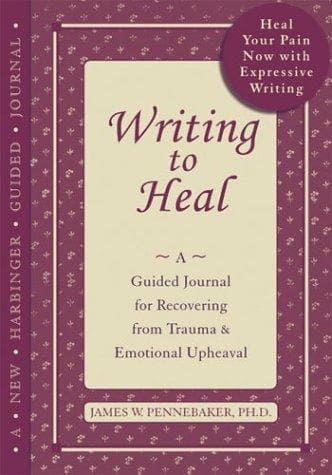
The do-it-at-home companion to Opening Up. Writing to Heal is a guided workbook of about a hundred and sixty pages with ruled space on the chapter pages, designed for a reader who wants to run the original protocol on themselves. The protocol is the same one the trials used: write your deepest thoughts and feelings about an emotional upheaval for fifteen to twenty minutes a day for four consecutive days. The book adds prompts and structure and not much new theory. If the reader already has Opening Up and a notebook, this is skippable. If they do not, this is the cleanest path from the research to a usable practice.
The Writing CureHow Expressive Writing Promotes Health and Emotional Well-Being
Lepore, Smyth · 2002 · American Psychological Association
the field's clinical synthesis. an edited volume where the expressive-writing trials get argued over by the people who ran them.
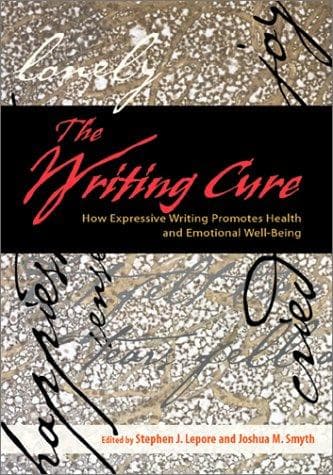
The 2002 academic edited volume that gathered the field at the mid-point of its life. Stephen Lepore and Joshua Smyth chair a roster of contributors, with Pennebaker writing the epilogue, and the chapters work through the disease-outcome trials (asthma, rheumatoid arthritis, metastatic breast cancer, blood pressure, immune function) one at a time. The book is twenty-three years old now and the disease-outcome chapters read as historical, but the mechanism chapters by Laura King, Kitty Klein, and Susan Lutgendorf still hold up. The book is the canonical citation for the volume people in the field reach for when they want the evidence base in one place. Treat it as a reference rather than a read-cover-to-cover.
The How of HappinessA New Approach to Getting the Life You Want
Lyubomirsky · 2008 · Penguin
the trade home for best-possible-self, three-good-things, and the gratitude letter, written by the researcher who ran the trials.
The popular-press home for the positive-psychology writing exercises. Sonja Lyubomirsky is the primary researcher behind the gratitude-letter and best-possible-self trials and one of the authors on the 50/40/10 heritability pie that anchors the book's argument. The book gives readers actual instructions for the best possible self exercise (Laura King's protocol from a 2001 study, where eighty-one undergraduates wrote about their imagined best future for twenty minutes on four consecutive days and reported elevated subjective well-being three weeks later) and for once-weekly gratitude journaling, which Lyubomirsky's own work suggests outperforms more frequent practice. The two-minute extension of the protocol by Burton and King has a following of its own.[1] The How of Happiness is the book that puts King's protocols in the hands of a general reader. It is the one to read for the actionable end of the science.
Thanks!How Practicing Gratitude Can Make You Happier
Emmons · 2008 · Houghton Mifflin Harcourt
the gratitude-journaling primary source. clear claims from the lead researcher, with clear limits.
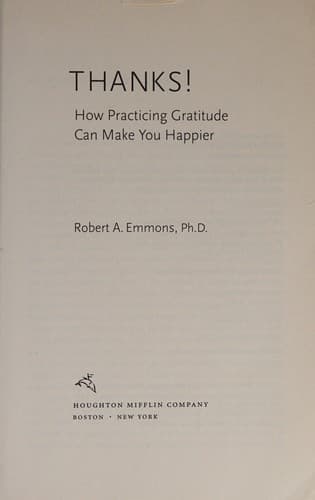
Robert Emmons is the researcher whose own 2003 trial with Michael McCullough made gratitude journaling a thing.[2] That trial ran three studies: ten weeks of weekly entries with a hundred and ninety-two undergraduates, two weeks of daily entries with a hundred and fifty-seven, and twenty-one days of daily entries with sixty-five adults living with neuromuscular disease. The gratitude conditions came out higher on positive affect, optimism for the upcoming week, and (in the third study) sleep quality. Thanks! is the trade-press distillation of that work and the years that followed. The book has the genre's typical problem, which is that the popular restatement of the findings (twenty-five percent happier and similar) has drifted away from what the original effect sizes can support, and the gratitude-intervention literature has had a quieter decade since. Worth reading as a primary source on the protocol, with the marketing claims sanity-checked against twelve gratitude RCTs ranked by control rigour.
FlourishA Visionary New Understanding of Happiness and Well-being
Seligman · 2012 · Atria
the field founder, with the three-good-things exercise and signature strengths. mixes hard evidence with army-resilience advocacy and a self-promotional streak.
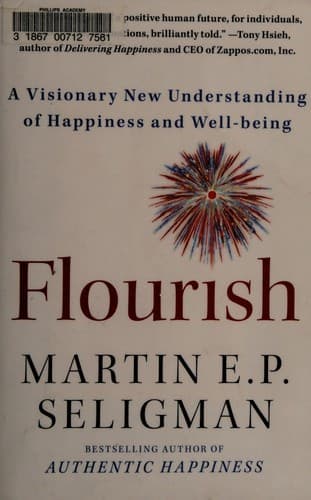
The book that gives a popular reader the three good things protocol and the signature-strengths exercise, both of which come out of the same six-arm internet trial that Seligman, Steen, Park, and Peterson ran in 2005.[5] The trial recruited about five hundred and seventy-seven baseline participants, dropped to four hundred and eleven who completed the five follow-ups, and tested five exercises against an early-memories placebo. Three good things (writing three blessings each night for one week) and using signature strengths in a new way held their gains at six months; the gratitude visit's gains were largest immediately and faded. Flourish introduces the PERMA framework, which is Seligman's revision of his earlier three-life model. The chapters on positive education and the US Army Comprehensive Soldier Fitness program have aged less well, the latter because Seligman had a commercial relationship with the contractor that ran it. The exercise chapters are the load-bearing ones. The army chapters read as partisan and the reader can skip them without losing the protocol material.
RedirectThe Surprising New Science of Psychological Change
Wilson · 2015 · Back Bay Books
the underread science book. a uva psychologist arguing most self-help is nonsense, except writing interventions, which keep working.
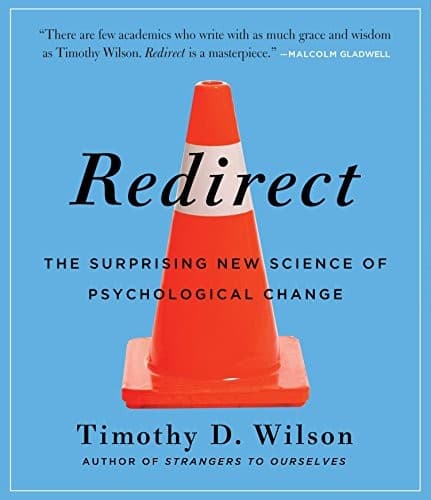
The most science-dense book on the shelf outside Pennebaker. Timothy Wilson is a Virginia social psychologist who has spent his career on affective forecasting and writing-based interventions, and Redirect is his synthesis. The book's distinctive move is to place expressive writing inside the wider category Wilson calls story editing, which includes value-affirmation writing (Geoffrey Cohen's school interventions), brief written reframes, and the kind of narrative revision that survives randomised trials. It is also the book that makes the strongest case against the unscientific end of the self-help genre, with Critical Incident Stress Debriefing as its running example of an intuitive intervention that controlled trials showed actively harms trauma victims. Underread because it landed between the trade and academic markets. The book the popular roundups should be citing and rarely do.
Positive PsychologyTheory, Research and Applications
Hefferon, Boniwell · 2011 · Open University Press
the textbook on positive psychological interventions. where three good things, gratitude letter, and best possible self get cited and explained.
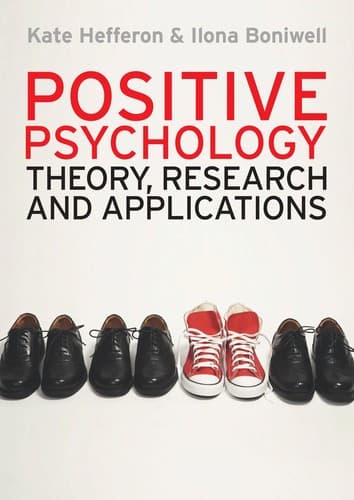
Where the field shelves itself. Hefferon and Boniwell's textbook is the reference work for positive-psychology interventions, and chapter eight in particular collapses the gratitude, optimism, and meaning literatures into a single twenty-four-page survey that names the writing exercises, ties each to its trial, and gives the reader citations to chase. The format is studentish and the prose is fine rather than electric, but the chapter structure is what an honest reader actually wants on this end of the shelf. Where Lyubomirsky and Seligman tell the reader what to do, this book tells the reader where the evidence lives. The 2018 second edition adds Tunariu without changing the load-bearing chapters.
even more interesting is that this exercise works even when you don't send the letter.
Emotional AgilityGet Unstuck, Embrace Change, and Thrive in Work and Life
David · 2016 · Avery
act-flavoured journaling for a general audience. well-cited synthesis, one step removed from the lab.
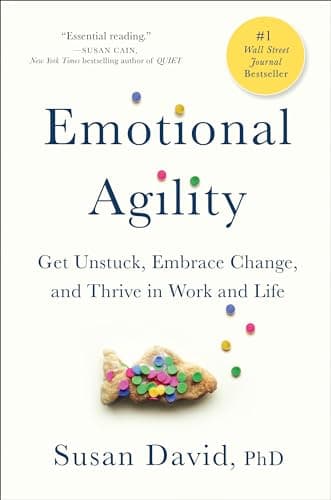
Susan David's work sits in the contemporary applied wing of the canon, alongside Kross. The book's lineage is the acceptance-and -commitment side of clinical psychology (the framework comes out of Steven Hayes's ACT), and David's four-step practice (show up, step out, walk your why, move on) translates that lineage into journaling prompts a general reader can run. The empirical anchor is thinner than Pennebaker's: David is a credentialed researcher and a Harvard Medical School affiliate, but the writing exercises in this book are coaching tools rather than protocols with their own randomised trials. Read it as a bridge from the lab work to a daily practice, not as a primary source. The accompanying TED talk, with about twelve million plays as of 2026, is the cleanest single-sitting introduction to the framing.
ChatterThe Voice in Our Head, Why It Matters, and How to Harness It
Kross · 2022 · Crown
the contemporary entry. citation-dense extension of the expressive-writing paradigm into rumination, by an active researcher.
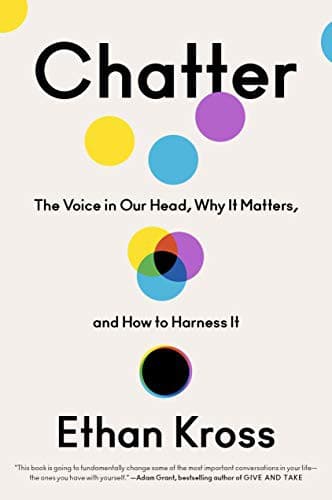
The strongest contemporary entry. Ethan Kross runs the Self-Control and Emotion Lab at Michigan and is the primary researcher behind the distanced self-talk literature, which extends Pennebaker's paradigm into the rumination domain. The book's contribution is a mechanism claim: writing helps with the inner voice partly because shifting from I to you or to one's own name produces measurable distance from the experience, and the writing protocol Kross recommends (fifteen to twenty minutes for one to three consecutive days, narrating the event in a third-person frame) is a direct extension of Pennebaker's earlier work. Citation-dense, accessible, in the same paragraphs as Pennebaker on the writing prescription itself. Chatter is the book to read after Opening Up if the reader's question is why does this work for rumination specifically.
what to read first
For a reader new to this shelf, Opening Up is the only obvious starting point. It is the book the rest of the shelf either extends or reacts to, and it is the only one that treats does this work as an empirical question with an answer that has shifted over time. From there the branching depends on what the reader is after. A reader who wants the actionable positive-psychology exercises with the researcher's own caveats attached should follow Pennebaker with Lyubomirsky. A reader who wants the meta-frame on what separates the writing literature from the rest of self-help wants Wilson. A reader chasing the rumination thread wants Kross. The textbook by Hefferon and Boniwell is the look-up reference for tracking citations once a particular finding catches.
The trade books that overclaim are easy to spot once the reader has seen the meta-analyses. The science-side canon, on its better days, is honest about how much of the earliest excitement was provisional, and the popular shelf is not. The two shelves can be read together; only one of them is held to the standard the trials set. The full science of journaling pillar carries the rest of the citation chain.
references.
- 1.Burton, C.M. & King, L.A. (2008). Effects of (very) brief writing on health: The two-minute miracle. British Journal of Health Psychology 13(1), 9–14.doi:10.1348/135910707X250910
- 2.Emmons, R.A. & McCullough, M.E. (2003). Counting blessings versus burdens: An experimental investigation of gratitude and subjective well-being in daily life. Journal of Personality and Social Psychology 84(2), 377–389.doi:10.1037/0022-3514.84.2.377
- 3.Frattaroli, J. (2006). Experimental disclosure and its moderators: A meta-analysis. Psychological Bulletin 132(6), 823–865.doi:10.1037/0033-2909.132.6.823
- 4.Pennebaker, J.W. & Beall, S.K. (1986). Confronting a traumatic event: Toward an understanding of inhibition and disease. Journal of Abnormal Psychology 95(3), 274–281.doi:10.1037/0021-843X.95.3.274
- 5.Seligman, M.E.P. et al. (2005). Positive psychology progress: Empirical validation of interventions. American Psychologist 60(5), 410–421.doi:10.1037/0003-066X.60.5.410
- 6.Smyth, J.M. (1998). Written emotional expression: Effect sizes, outcome types, and moderating variables. Journal of Consulting and Clinical Psychology 66(1), 174–184.doi:10.1037/0022-006X.66.1.174
related.
- best time to journal, there is no rctno head-to-head trial settles morning vs evening journaling. four indirect lines of evidence, chronobiology, sleep, worry, and one bedtime study, tilt one way.
- the rumination trapwhen does journaling backfire. the rumination literature, the four signs of stuck self-attention, and what structured writing does instead.
- ten journaling books we don't recommendthe popular journaling shelf has a contrarian list of its own. ten books that overclaim, ignore the evidence, or sell as journaling what isn't.