the science of journaling
ten journaling books we don't recommend
the popular journaling shelf has a contrarian list of its own. ten books that overclaim, ignore the evidence, or sell as journaling what isn't.
the popular shelf comes with a contrarian list of its own
The popular journaling roundups are remarkably consistent about what they recommend, and almost silent about what they don't. The Artist's Way, The Bullet Journal Method, and the eight or nine other titles that anchor the canon get cited so often they have stopped meaning anything. Underneath them sits a much larger shelf of journals, workbooks, and prompt pads that move millions of copies a year and that the roundups tend to nod through politely, either out of category loyalty or out of the awkward fact that some of them are written by people with very large mailing lists. A reader who treats a roundup as a buying guide ends up holding two or three of these books before realising they share a defect the canon doesn't.
There are roughly four ways a journaling book fails. It overclaims: gestures at positive psychology, cites no studies by name, and sells a daily protocol the field's own researchers tested at a weekly cadence.[5] It runs a methodological vacuum: presents one person's morning routine as a portable system without ever benchmarking it against a control. It takes an anti-evidence stance: treats the law of attraction or a metaphysical universe as the operative mechanism and frames doubt itself as the reason the practice would not work for the reader. Or it makes no claim at all, and gets shelved next to books that do, and gets bought as if it had. The ten books below cover all four modes.
ten books, four failure modes
The list moves from the most evidence-adjacent failures to the least. The first four books invoke positive-psychology research and contradict it. The fifth and sixth substitute the author's own routine for any methodology. The seventh through ninth abandon evidence as a category. The tenth never asked to be on the journaling shelf at all.
The Five Minute JournalA Happier You in 5 Minutes a Day
Ikonn, Ramdas · 2013 · Intelligent Change
gratitude journaling sold as the simplest path to happiness. invokes positive psychology without citing it, and prescribes daily what the evidence supports weekly.

The product that taught a generation of buyers that "science-backed" was a marketing surface and not a citation. The Five Minute Journal is a morning-and-evening template: three gratitudes and a day's intention on waking, three reflections and a self-affirmation at night. Intelligent Change calls it "the simplest, most effective thing you can do to be happier" and credits "proven principles of positive psychology" without naming a single trial, researcher, or outcome figure on the product page. The protocol asks for daily entries. The closest empirical ancestor is Sheldon and Lyubomirsky's 2006 counting-blessings work, which found that participants who wrote gratitude lists once a week sustained well-being gains while those who wrote them three times a week did not, because frequency dampened the effect through hedonic adaptation.[5] Cregg and Cheavens's 2021 meta-analysis of twenty-seven gratitude-intervention RCTs reported a small effect on depression and anxiety that shrank further against active controls and was unstable across protocols.[1] The journal sells the headline finding from Emmons's 2003 work and prescribes the cadence the rest of the field has spent twenty years walking back.[3]
The 6-Minute DiaryA Simple and Effective Tool for More Gratitude and Mindfulness
Spenst · 2017 · UrBestSelf
a german-engineered five minute journal with a longer intro. cites the research it then ignores by demanding daily entries.
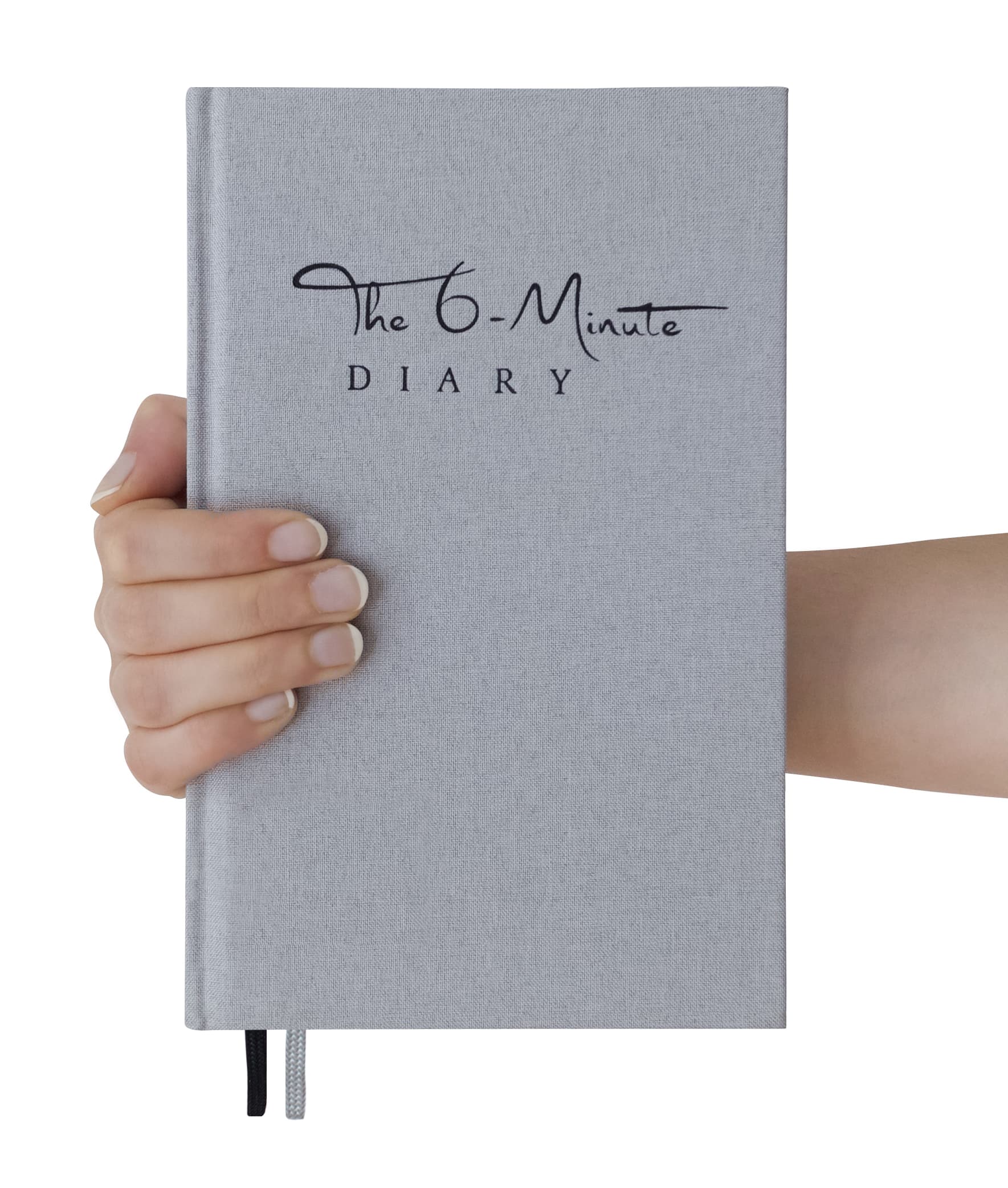
The German clone, in English. Dominik Spenst's 6-Minute Diary arrived in 2017 with the same morning-evening split as Intelligent Change's 2013 product, the same three-gratitudes-plus-intention frame, the same daily cadence, and a longer onboarding essay that cites Emmons, Seligman, and Lyubomirsky by name without addressing the dosage question. A 2022 Frontiers RCT of a hundred and fifty-seven participants found that the diary reduced negative affect and briefly lowered perceived stress over four weeks but produced no significant gain in positive affect, which is what hedonic adaptation predicts when you push the gratitude protocol from weekly to daily. The book treats this as a "protective" outcome rather than a refutation of its own marketing. The longer intro is the differentiator from Intelligent Change. The core practice prescription is identical, and inherits the central bug.
read it
The Miracle MorningThe Not-So-Obvious Secret Guaranteed to Transform Your Life (Before 8AM)
Elrod · 2012 · Hal Elrod International
a 60-minute morning stack with journaling as one undefended slot, sold by a survival anecdote and a guarantee no protocol can keep.
The book that wrote the script for productivity-mystic morning routines in the 2010s. Hal Elrod's SAVERS protocol stacks Silence, Affirmations, Visualization, Exercise, Reading, and Scribing into a sixty-minute pre-dawn block, and journaling lives inside it as the final S, with no duration specification beyond a five-minute floor and no instruction beyond "free-write or list gratitudes." There is no controlled trial of SAVERS and no isolated study of its journaling component. The authority claim is autobiographical: Elrod survived a serious car crash and, in later editions, acute lymphoblastic leukaemia, and presents the routine as the engine of his recovery. The cover subtitle promises a result ("guaranteed to transform your life") that no behavioural intervention can deliver, and the franchise has since extended to Miracle Morning for Writers, for Entrepreneurs, for College Students, and a companion planner, all repackaging the original anecdote-based claim as a settled finding.
The High 5 HabitTake Control of Your Life with One Simple Habit
Robbins · 2021 · Hay House
one motivational-speaker gesture dressed as neuroscience. mirror-neuron talk without a controlled trial, then upsold into a companion journal.
A motivational-speaker gesture dressed in neuroscience. Mel Robbins asks the reader to high-five the bathroom mirror each morning, and explains the ritual through "mirror neurons," dopamine release, and the claim that the brain "literally rewires" through the gesture's accumulated positive associations. The mirror-neuron framing is a familiar neuroscience overreach: those neurons fire when observing goal-directed motor actions in others, and their role in self-directed behaviour change has not been demonstrated in any peer-reviewed trial. Davis's 2016 meta-analysis of self-affirmation interventions tested value-writing exercises across academic and health domains, not somatic rituals, and found small effects under particular conditions rather than the universal rewiring the book promises.[2] The back third of the book turns into prompts, and Hay House productised that end further as The High 5 Journal a year later. The gesture itself is probably harmless; the neuroscience around it is sold with a certainty the underlying literature has not earned.
Start Today Journal
Hollis · 2019 · The Hollis Company
a branded morning routine sold as a system. no methodology section, no research engagement, no protocol literature behind the future-self prompts.
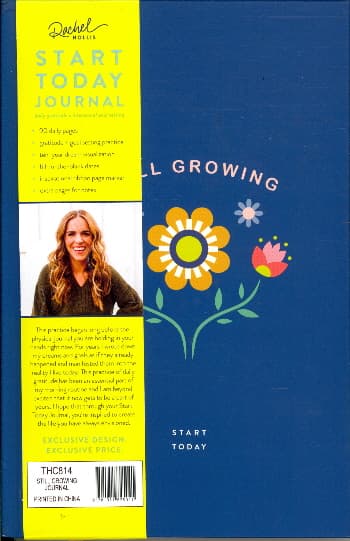
A branded morning routine in fill-in-the-blank form. Rachel Hollis's Start Today Journal runs ninety days of three prompts: list five things you are grateful for, restate ten dreams in the present perfect ("this book has sold a million copies"), and identify the one goal you'll achieve first. The framing is closest to Laura King's 2001 best-possible-self protocol, which has held up well in randomised trials, but King's protocol is twenty minutes a day across four days, not a daily ninety-day fill-in, and the difference is the whole study. The journal cites no research, names no precedent, and offers Hollis's own narrative as the warrant. After the brand's 2020-2021 reputational unravelling the author-as-warrant strategy became less load-bearing, which left the product resting on a methodology section it never wrote.
read it
Awaken the Giant WithinHow to Take Immediate Control of Your Mental, Emotional, Physical and Financial Destiny
Robbins · 1991 · Free Press
trademarked self-help dressed as method. the morning power questions persist. the evidence base never arrived.
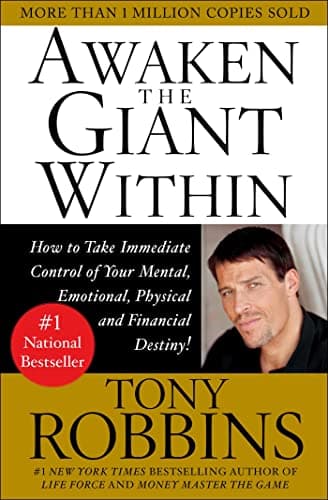
The 1991 source text for the productivity-religion crossover that the last forty years of self-help has been working out. Tony Robbins frames the morning-power-questions exercise (what am I happy about, what am I proud of, what am I grateful for) as a daily writing practice and embeds it inside Neuro-Associative Conditioning, a six-step protocol trademarked to Robbins and presented as a science of directing the brain on cue. There are no controlled trials of NAC, no replication, no external researchers; the citations are to Robbins's own prior work and to selectively framed clinical anecdotes. The trademark functions as credentialing. The morning-power-questions skew uniformly positive and train selective recall rather than reflective accuracy, with no acknowledgement of the rumination literature that already existed by 1991. The journaling prompts now circulate widely on Instagram and in productivity-coach decks without their NAC framework, which suggests the framework was never load-bearing in the first place.
The Magic
Byrne · 2012 · Atria Books
gratitude as law-of-attraction ritual. the 28-day program treats doubt itself as the failure mode, which is unfalsifiable by design.
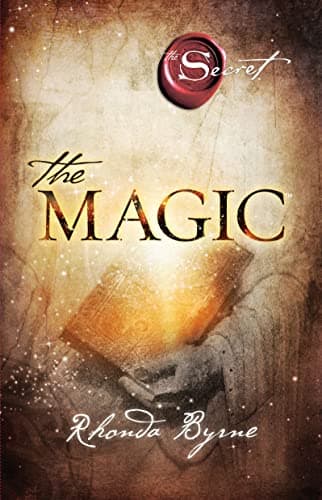
The 2012 sequel to The Secret, with gratitude in the role formerly played by visualisation. Rhonda Byrne's twenty-eight-day program runs the reader through Count Your Blessings, The Magic Rock, Magical Money, Magical Health, and a closing Magical Wand exercise in which one writes thanks for things not yet possessed in order to summon them. The animating premise is that gratitude activates the law of attraction and that the universe responds in proportion to the gratitude expressed. Money, health, and circumstances are framed as outputs of a metaphysical input-output loop. This is structurally incompatible with the empirical gratitude literature it superficially resembles. Emmons and McCullough's 2003 trial described modest effects on subjective well-being mediated by affect regulation and reframing.[3] The Magic does not engage that literature, does not cite it, and reattributes any null outcome to the reader's insufficient belief, which is the canonical anti-evidence move and the reason the claim is unfalsifiable by design.
Manifest7 Steps to Living Your Best Life
Nafousi · 2022 · Michael Joseph
scripting and vision boarding sold as journaling. confessional, not empirical, and never claims to be otherwise.
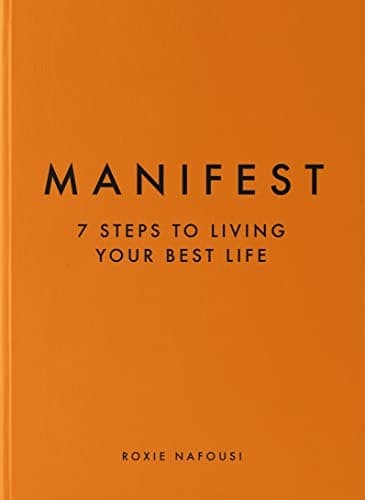
A confessional law-of-attraction manual shelved as journaling. Roxie Nafousi's seven-step framework leans on three writing practices: vision boarding, gratitude lists, and scripting, the last of which asks the reader to write a goal in the present tense as if it has already happened. Scripting superficially resembles King's best-possible-self exercise the way the Hollis journal does, and skips the same things: the bounded twenty-minute protocol, the comparison condition, the framing as an affect-regulation intervention rather than a metaphysical channel-opener. The book makes essentially no empirical claim. There is no reference list, no engagement with the affective-forecasting literature, and no mention of King 2001. The author's authority is testimonial: a recovery story and a coaching practice. Manifest is a devotional book that ends up shelved as a journaling manual, travelling on a category label it never asked for.
The Universe Has Your BackTransform Fear to Faith
Bernstein · 2016 · Hay House
acim-flavoured prayer journaling sold as self-help. devotional practice, not an evidence-graded writing intervention.
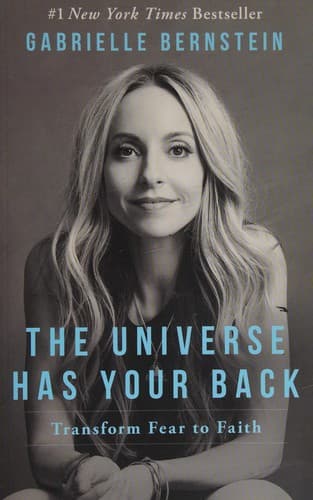
A devotional manual dressed in self-help clothing. Gabrielle Bernstein is a long-time A Course in Miracles teacher, and The Universe Has Your Back operationalises the Course's two-state ontology (you are either in fear or in love) through prayer journaling, surrender journaling, and fear-to-faith reframes. The 2018 companion product formalises the prompts as fill-in pages. None of this is positioned as evidence-supported, and Bernstein never claims it is. The category error is the cover and the shelving rather than the contents. To a reader scanning the journaling table at the bookstore for a writing practice that will help them think more clearly or process emotion, the exterior signals craft and self-help; the interior is theology requiring assent to the Course's metaphysics. Pennebaker's expressive-writing protocol has produced measurable affective and immune outcomes across two hundred-plus controlled studies, which is the category readers think they are buying into when the cover signals self-help.[4]
Burn After Writing
Jones · 2014 · TarcherPerigee
a fill-in-the-blank prompt pad sold by tiktok and shelved by amazon as journaling. the book never claimed to be.
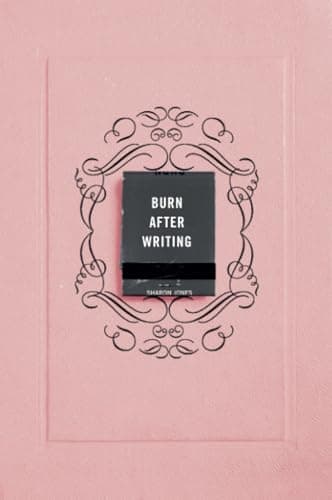
The roundup's category error in book form. Sharon Jones's Burn After Writing is a hundred-and-sixty-page prompt pad of fill-in-the-blank fields ("favourite films", "biggest fears", "past lovers") with a four-page framing essay and the instruction to destroy the book afterwards. Originally a 2014 release on a small UK indie imprint, it sat quietly until a 2020 TikTok video pushed it onto Penguin's reissue list. The book makes no therapeutic claim. There is no Pennebaker, no protocol duration, no instruction to revisit entries, no affect or rumination language anywhere in the marketing.[6] It is honest about being a prompt pad. The miscategorisation sits in the retail layer: Burn After Writing gets shelved next to The Artist's Way in the journals-and-self-discovery section, and the buyer who wanted a writing practice goes home with a party game in a striking black cover.
what to read instead
The contrarian list is shorter than the recommended one because most of the popular shelf is fine. The eight books on the popular canon and the ten on the science-side shelf together cover the legitimate claims the genre can support, with the caveats the trade-press canon will not write. A reader who has bought one of the ten books above and felt the protocol soften under their own attention has not failed the practice. The protocol was the artefact, marketed at a cadence the field's own evidence does not support, or with an evidence base it never had, or as a writing intervention it never claimed to be.
The fourth failure mode is the one that does the most actual damage, and it does not live inside any of the books. Burn After Writing, The Universe Has Your Back, and Manifest are all honest about what they are. A prompt pad, a Course in Miracles devotional, a law-of-attraction manual. The category error happens at the retail shelf and on the roundup blog, where these books get filed next to The Artist's Way and read by buyers who came in for a writing practice. The other six books on the list overclaim in print; these three are mostly misshelved by people who have not read them.
The pattern across all four failure modes is the same. The book, or the shelf around the book, substitutes something for evidence. A researcher's name without a study, an autobiography, a metaphysical mechanism, a TikTok, a misfiled cover. The substitute does not survive a careful reader. The science-side shelf is honest about the shrinkage between Smyth 1998 and Frattaroli 2006, which is roughly the gap between a third of a standard deviation and a seventh, and which is the single most useful frame for reading any journaling claim. None of the ten books above tells that story, which is why the science of journaling pillar is the better foundation for the practice the popular shelf almost gets to.
references.
- 1.Cregg, D.R. & Cheavens, J.S. (2021). Gratitude interventions: Effective self-help? A meta-analysis of the impact on symptoms of depression and anxiety. Journal of Happiness Studies 22(1), 413–445.doi:10.1007/s10902-020-00236-6
- 2.Davis, D.E. et al. (2016). Thankful for the little things: A meta-analysis of gratitude interventions. Journal of Counseling Psychology 63(1), 20–31.doi:10.1037/cou0000107
- 3.Emmons, R.A. & McCullough, M.E. (2003). Counting blessings versus burdens: An experimental investigation of gratitude and subjective well-being in daily life. Journal of Personality and Social Psychology 84(2), 377–389.doi:10.1037/0022-3514.84.2.377
- 4.Frattaroli, J. (2006). Experimental disclosure and its moderators: A meta-analysis. Psychological Bulletin 132(6), 823–865.doi:10.1037/0033-2909.132.6.823
- 5.Lyubomirsky, S. et al. (2006). The costs and benefits of writing, talking, and thinking about life's triumphs and defeats. Journal of Personality and Social Psychology 90(4), 692–708.doi:10.1037/0022-3514.90.4.692
- 6.Smyth, J.M. (1998). Written emotional expression: Effect sizes, outcome types, and moderating variables. Journal of Consulting and Clinical Psychology 66(1), 174–184.doi:10.1037/0022-006X.66.1.174
related.
- twelve gratitude rcts ranked by control rigourtwelve gratitude rcts ranked by what they controlled for. the effect collapses as rigour rises. the honest read on gratitude journaling research.
- best time to journal, there is no rctno head-to-head trial settles morning vs evening journaling. four indirect lines of evidence, chronobiology, sleep, worry, and one bedtime study, tilt one way.
- ten science-of-journaling books worth readingthe science-side canon of journaling books is smaller than the popular shelf. ten books, four decades of research, honest about what replication has shown.